Fileverse: the Greek who wants to wean the internet off Google (WIRED Greece, translated)
An English translation of a feature article published by WIRED Greece by Nikos Efstathiou, Editor-in-Chief of WIRED Greece, on 22 June 2026.
More than 3.2 billion people rely on Google Workspace every day. Andreas Tsamados believes no single company should hold that much power, and he is trying to build an alternative.
More than half of all internet users open a file hosted on Google's infrastructure every day. Documents and spreadsheets, presentations and shared folders. For most people, Google Workspace has come to feel synonymous with the internet itself and with the modern way of working.
Andreas Tsamados believes this is a serious problem. And he has the audacity to propose a new solution.
Fileverse is developed as open-source software, and much of its reach comes from communities interested in privacy, open software and decentralisation.
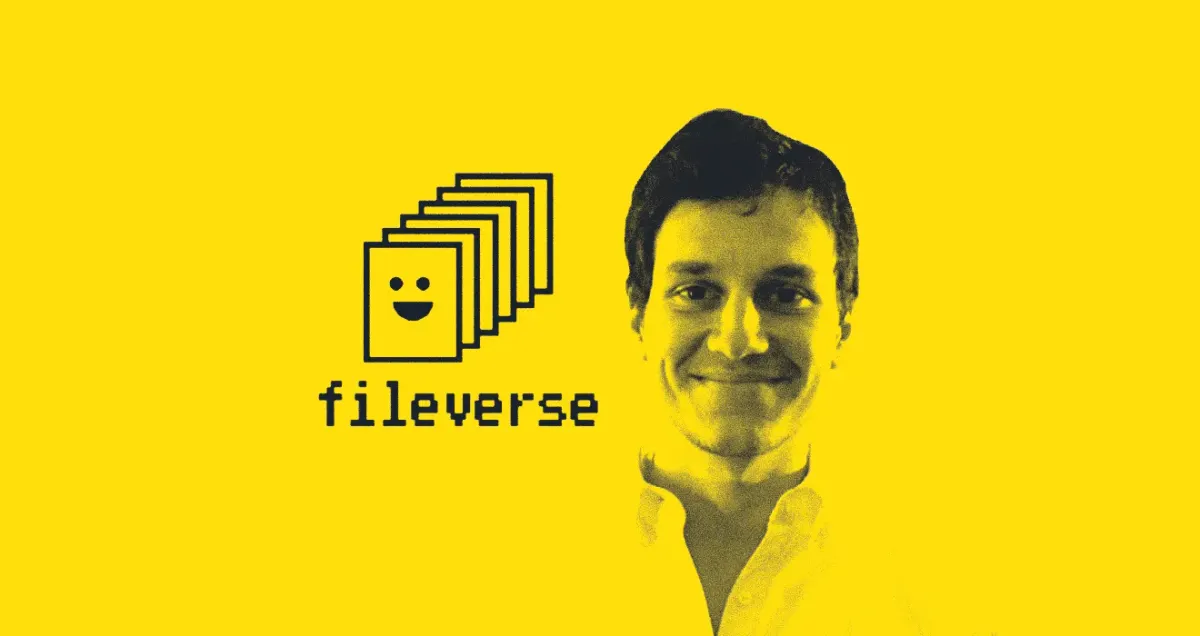
At 29, the half-Greek, half-French cybersecurity researcher is completing his doctorate at the University of Oxford, on the use of AI in cyber operations and on human-machine collaboration. For the past two and a half years, alongside his academic research, he has devoted himself to a different problem: how do you build an alternative to one of the most powerful technological empires on the planet?
The answer he and his ten-person team are attempting is called Fileverse.
"We didn't want to build yet another tool that forces users to learn a completely new philosophy in order to protect their data," Andreas tells WIRED Greece. "We wanted to offer something that feels familiar, but works on different principles."
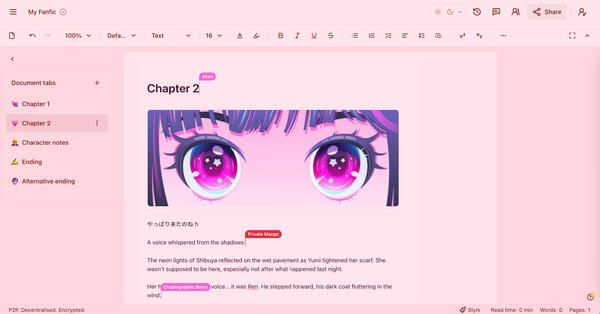
At first glance, the platform looks familiar: documents, spreadsheets, file storage, real-time collaboration. Email, calendar, forms and whiteboarding tools will soon be added to Fileverse's services. In terms of user experience, the platform deliberately tries to resemble the apps that billions of people already use through Google.
The big difference, though, lies beneath the surface.
everyone: privacy apps are difficult to use
— Fileverse (@fileverse) April 17, 2026
ddocs: ⇩💛🩷💚 🔊⇩ pic.twitter.com/t3xcncTWlm
For decades, the dominant model of the internet has been built on centralisation. Data is stored on central servers, so access is controlled by a single company. Services connect to one another inside closed ecosystems that make it ever harder for a user to move elsewhere.
This logic produced giants like Google, Microsoft and Meta. At the same time, it created a new form of dependency. When an outage hits a large cloud service, the impact is not limited to the company itself. Businesses, public services, developers and millions of workers who have built their daily lives on these platforms are all affected.
For Andreas, that is exactly where an enormous problem hides, not only in terms of privacy but in the wider architecture of the internet. And that is where the solution he hopes to offer with Fileverse lies: decentralisation.
The internet was not designed for monopolies
"We don't think the answer is to replace an American dependency with a European one," he argues, explaining Fileverse's core philosophy. "We want to build systems that don't depend on any central authority."
Instead of everything passing through central servers, the company uses decentralised technologies, end-to-end encryption and a storage model that gives more control to the user. Documents can even be used offline, without a constant connection to a cloud server on the other side of the world.
What seems to be changing today is the realisation that dependence on the big tech platforms is also a matter of digital autonomy itself.
This approach recalls the internet's original promise as an open network more than today's model of digital walled gardens.
The most radical element of Fileverse, however, is not only its encryption and decentralisation but its ambition to make itself unnecessary. Andreas describes a system where, even if the company disappeared tomorrow, users would keep access to their files and tools.
In an era where almost every digital service operates as a subscription dependency on a provider, the idea sounds almost heretical. And yet it seems to strike a chord. When the team released the first versions of its tools as open-source software, it did not pair them with aggressive marketing campaigns or large rounds of funding. Instead, all it did was add a single donate button.
And yet the response was striking. Within the first few months, more than 15,000 users had contributed financially to the project, giving over 300,000 dollars in total. For a team trying to prove there was demand for a different model of online collaboration, the message was clear: perhaps the internet was already looking for an alternative.
The age of digital autonomy
Fileverse's rise coincides with a broader shift under way in Europe over recent years. For a long time, concerns about personal data, surveillance or the concentration of power in the big tech platforms remained fairly abstract for the average user. Edward Snowden's revelations, the Cambridge Analytica scandal and the steady stream of data breaches created cracks in trust towards the big platforms.
Even so, for most people, convenience continued to outweigh the concerns.
What seems to be changing today is the realisation that dependence on the big tech platforms is also a matter of digital autonomy itself.
"I think Trump acted as a catalyst," Andreas says. "He wasn't the beginning of the shift. He was the point where many different concerns started to connect with one another."
In his view, mistrust of the big platforms had been building for years. Revelations about mass data collection, the spread of deepfakes, the commercialisation of every digital trace and the sense that users have less and less control over their digital identity created an undercurrent of discontent that is now becoming more visible.
At the same time, Europe has begun to debate its digital sovereignty ever more intensely. From cloud infrastructure and microchips to artificial intelligence and social networks, the European Union is gradually realising that its dependence is a strategic misstep. That debate usually revolves around the need to create European champions capable of competing with the American and Chinese platforms. Andreas, however, considers the dilemma to be wrongly framed, and places Fileverse in a different universe.
"We're not saying we should become independent from American Big Tech only to depend on a European Big Tech," he argues. "Replacing one monopoly with another doesn't actually solve the problem."
His own proposal, then, sits closer to what he calls self-sovereignty: an architecture where users, organisations and companies keep control of their data without having to trust a central intermediary.
According to Andreas, a large share of Fileverse's early business users come from startups working in cybersecurity, artificial intelligence or other fields where control of data is seen as critical. "We're seeing more and more European startups approach us very early on," he explains. "They don't want to build their company on infrastructure they depend on entirely."
dDocs<>Markdown Split View👩💻
— Fileverse (@fileverse) June 11, 2026
Write and collaborate with e2e encryption in raw markdown, see it rendered instantly w/..
>mermaidJS diagrams
>github flavour
>tables
>code blocks
>styling in-line HTML code
🍓One click to split, one to collab. Any files. All private. Sound on! pic.twitter.com/Avv1Mo1w1G
The same interest, he says, is coming from government bodies too. Although he avoids giving further detail, he mentions that two governments are already testing Fileverse's tools.
He attributes much of this momentum to an organic community of users that has formed around the project. Fileverse is developed as open-source software, and much of its reach comes from communities interested in privacy, open software and decentralisation. Every time a government tries to restrict the use of encryption, or the debate over authorities' access to private communications resurfaces, the team sees new users looking for alternatives.
"There is now a whole generation of users who see their phone, their files and their data as an extension of their very identity," he says.
David against the Goliaths
The question, of course, is whether a team of ten people can really challenge an infrastructure used by billions. The history of technology is full of people who believed they could take on monopolies. Most of them failed.
Andreas Tsamados, though, does not seem particularly worried, and takes pride in the fact that Fileverse, like another David, faces the Goliaths of Silicon Valley.
Fileverse is not trying to beat Google at its own game. It does not have Google's data centres, its capital or its billions of users. It is trying to win on a different field: trust.
"If our growth rate keeps up like this, in two years Google will start to panic and use more aggressive tactics to squeeze us," he says with a sly smile that radiates confidence.
So far, the signs are encouraging. The platform has built a particularly active community of users and is attracting startups looking for greater control over their data, while its supporters include figures such as Ethereum co-founder Vitalik Buterin.
For him, though, the greatest validation is not users or investors. It is that a conversation which a few years ago seemed marginal has now moved to the centre of public debate.
Fileverse, after all, is not trying to beat Google at its own game. It does not have its data centres, its capital or its billions of users. It is trying to win on a different field: trust. The internet was once designed as an open network, where no single entity could control the flow of information and collaboration.
Three decades later, Andreas and a new generation of European builders are trying to discover whether that promise can still be kept.
Read the original article in Greek by Nikos Efstathiou on WIRED Greece: Fileverse: Ο Έλληνας που θέλει να απεξαρτήσει το internet από τη Google