dDocs - Decentralized Alternative to Google Docs
The launch of ddocs.new marks a shift towards a more open and permissionless Internet. Designed to counter the pitfalls of Google Docs, dDocs offers an open-source alternative that prioritises user autonomy and privacy.
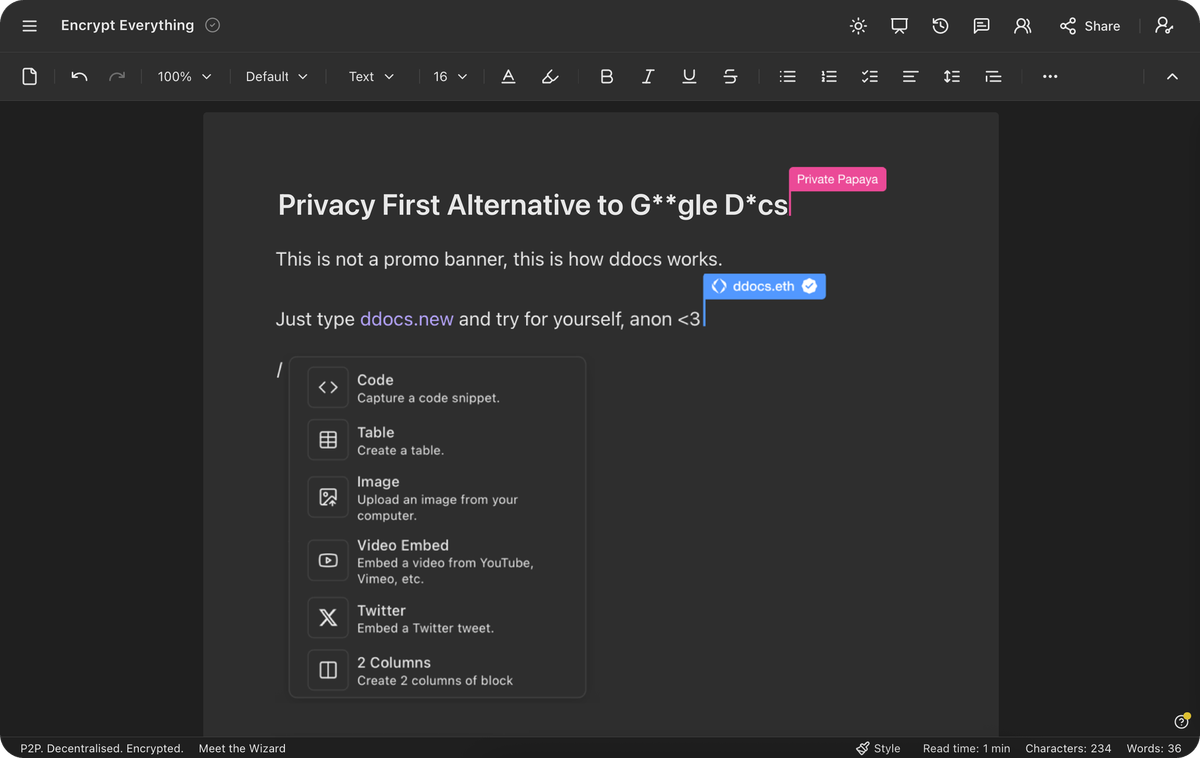
Over 3 billion people depend on a single suite of closed-source apps for writing, collaboration, and data management. The launch of ddocs.new marks a shift towards a more open and permissionless Internet. Designed to counter the pitfalls of Google Docs, dDocs offers an open-source alternative that prioritises user autonomy and privacy.
The first goal of dDocs is to shed light on the performative neutrality of centralised apps like google docs, so that we can unmask the exploitative practices it facilitates and help people make informed choices about their digital lives. Its second goal is to be the open alternative to a closed-source tool posing as a digital public good.
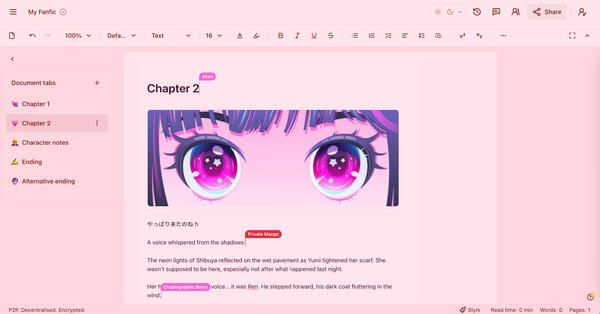
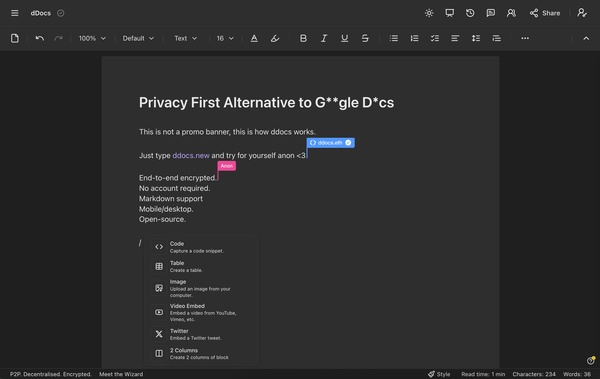
ddocs.new is built for everyone: simple enough for everyday users yet powerful enough for tech enthusiasts. The real-time collaboration editor can be accessed directly on browsers (no download), used without any internet connection, and is optimised for both mobile and desktop. dDocs is also usable without creating an account.
* Self-sovereignty: your work life should not depend on the ongoing existence of a third-party corporation; ddocs is working towards fully p2p / client-side incl the collab features
— vitalik.eth (@VitalikButerin) October 22, 2024
* Privacy: ddocs is e2e encrypted
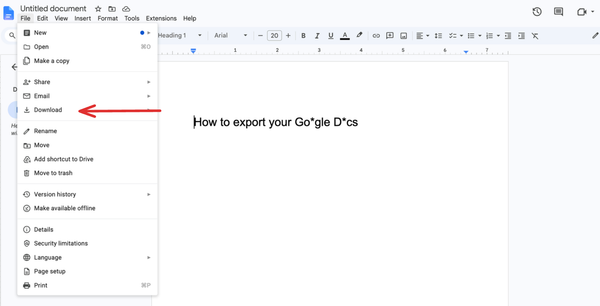
* Standards compliance: ddocs supports import/export to…
With end-to-end encryption by design, ddocs.new ensures that user data remains accessible only by the document owner and those they choose to share with, not even Fileverse, the team behind dDocs, can read them. This encryption approach is also maintained during real-time collaboration.
dDocs is built local-first: by default documents live in the browser, which is why the app works even with no internet connection. Cloud-like collaboration and cross-device syncing are also available, leveraging decentralized storage like IPFS rather than locking data into a single centralized cloud.
There are no lock-in mechanisms: documents can be recovered independently at any time, even if the dDocs app goes down. A static walkaway page lets the files be fetched and decrypted directly, with no reliance on Fileverse infrastructure.
The editor uses zero-knowledge proofs for access control and account recovery. Collaborators can prove they're allowed into a document, or recover an account, without ever exposing their identity to the platform. Verification happens directly on the device.
dDocs is the culmination of years of research on peer-to-peer networks and applied cryptography, built to guarantee people's freedom by design. The app is powered by Fileverse, here is the codebase you can audit and verify, or participate to: Fileverse, Fileverse storage, Fileverse cryptography, dDocs v.01, dDocs walkaway.
Try it out now, just search ddocs.new on your browser.
For more info follow Fileverse on X 💛
Time to ditch G**gle d*cs.
— Fileverse (@fileverse) July 9, 2024
Introducing: https://t.co/pbiaxNXV2K 𓅯
Privacy-enhancing. Peer-to-peer. Onchain. pic.twitter.com/OYiaas4AMT